
When people ask about my first exhibition experience, my mind often goes back to a small art fair I participated in while living in Belgium during my secondary school years. However, the exhibition that truly marked the beginning of my journey as an exhibiting artist was a small solo exhibition called Manga ved Stranden (Manga at the Beach) in Thyborøn, Denmark.
The exhibition took place in the old Skibssmedie (Ship Smithy), a charming venue near the coast. Looking back, it was both an exciting and educational experience that taught me valuable lessons about exhibiting, selling artwork, and connecting with visitors.
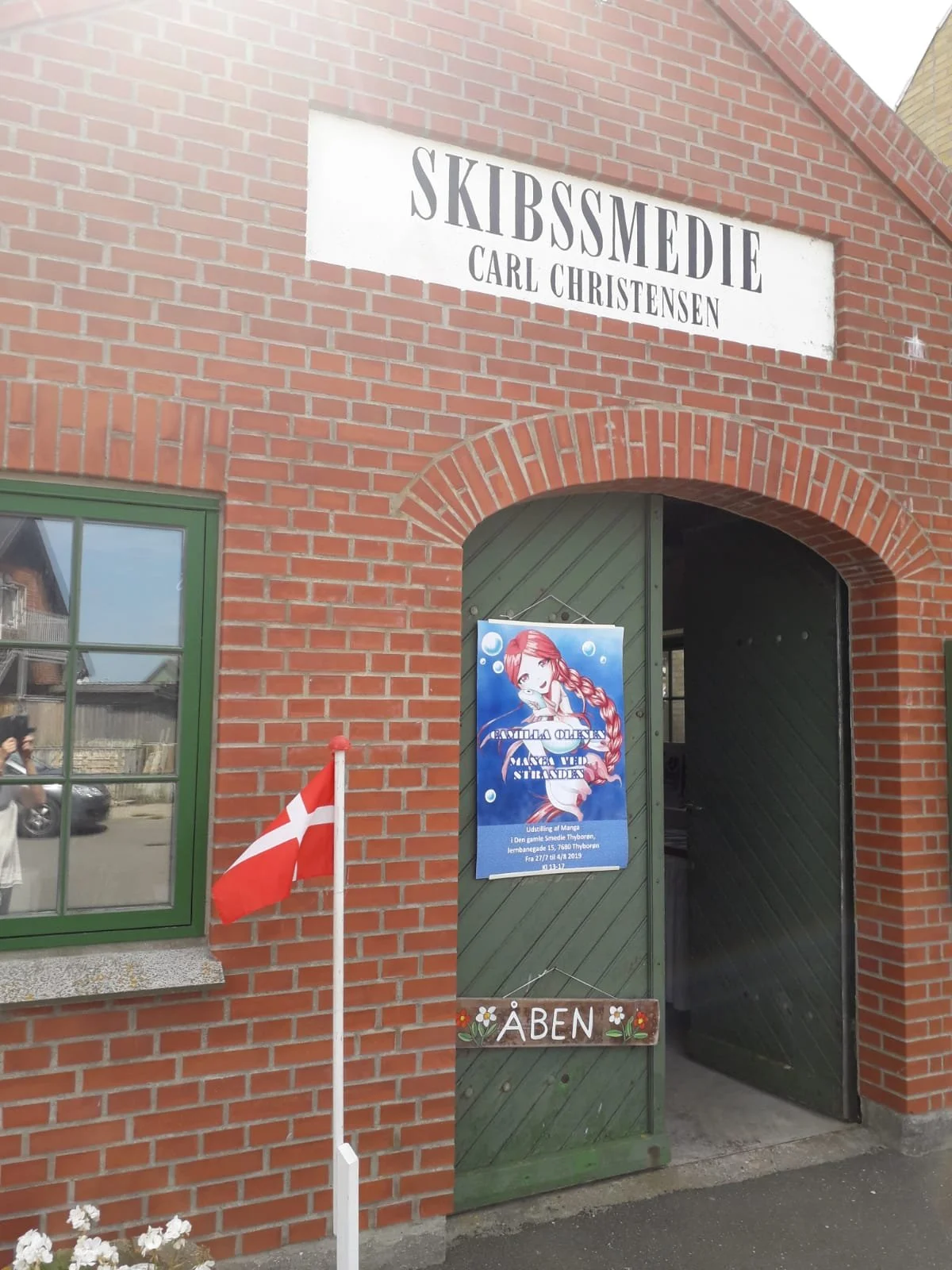
Venue the ships smith Carl Christensen
How the Exhibition Came About
At the time, I was trying to figure out how to build an art career. One day, my parents approached me with an unexpected opportunity: there was a possibility of renting a small exhibition space in Thyborøn for a limited period.
Naturally, I was thrilled.
With a venue secured, I began preparing the artwork I wanted to showcase. Most of my work today is created digitally using Clip Studio Paint and my trusty XP-Pen tablet. However, before digital art became my primary medium, I worked traditionally with ink and Copic markers.
For the exhibition, I created around twenty illustrations that would be displayed and offered for sale. I thought I was finished once the artwork was complete—until my mother pointed out something important.
"You're not done yet."
Confused, I asked what she meant.
She explained that visitors might not always be able to afford original artworks, so it would be wise to offer more affordable products such as posters and postcards. Looking back, this was some of the best advice I received.
I worked with Vester Kopi in Frederiksberg to produce high-quality prints of my illustrations, creating both posters and postcards that visitors could take home.
Preparing for Opening Day
To help promote the exhibition, I was fortunate enough to be featured in a local newspaper article. We took a promotional photo in front of a large painting in our living room, and the article helped spread awareness about the exhibition.
Of course, not everything went perfectly.
In my excitement, I accidentally misunderstood the opening date listed in the newspaper. As a result, some visitors arrived a day early only to find the exhibition closed. It was an embarrassing mistake, but thankfully one that people took with good humour.
Before opening, I also had to take on the role of curator. Together with my parents, I carefully arranged the exhibition space. Rather than simply hanging every piece on the walls, I used boxes and display elements throughout the venue to create a more dynamic presentation.
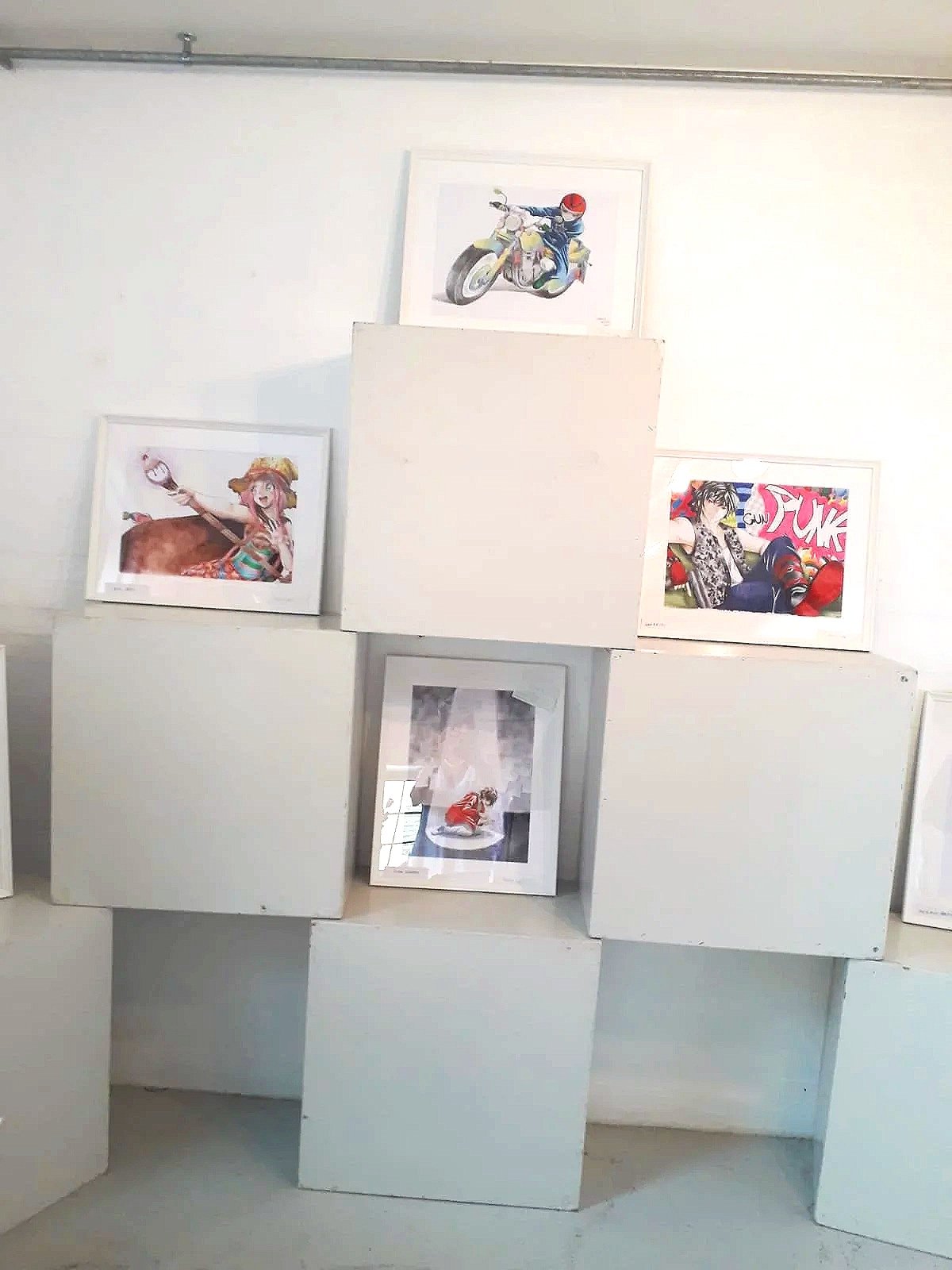
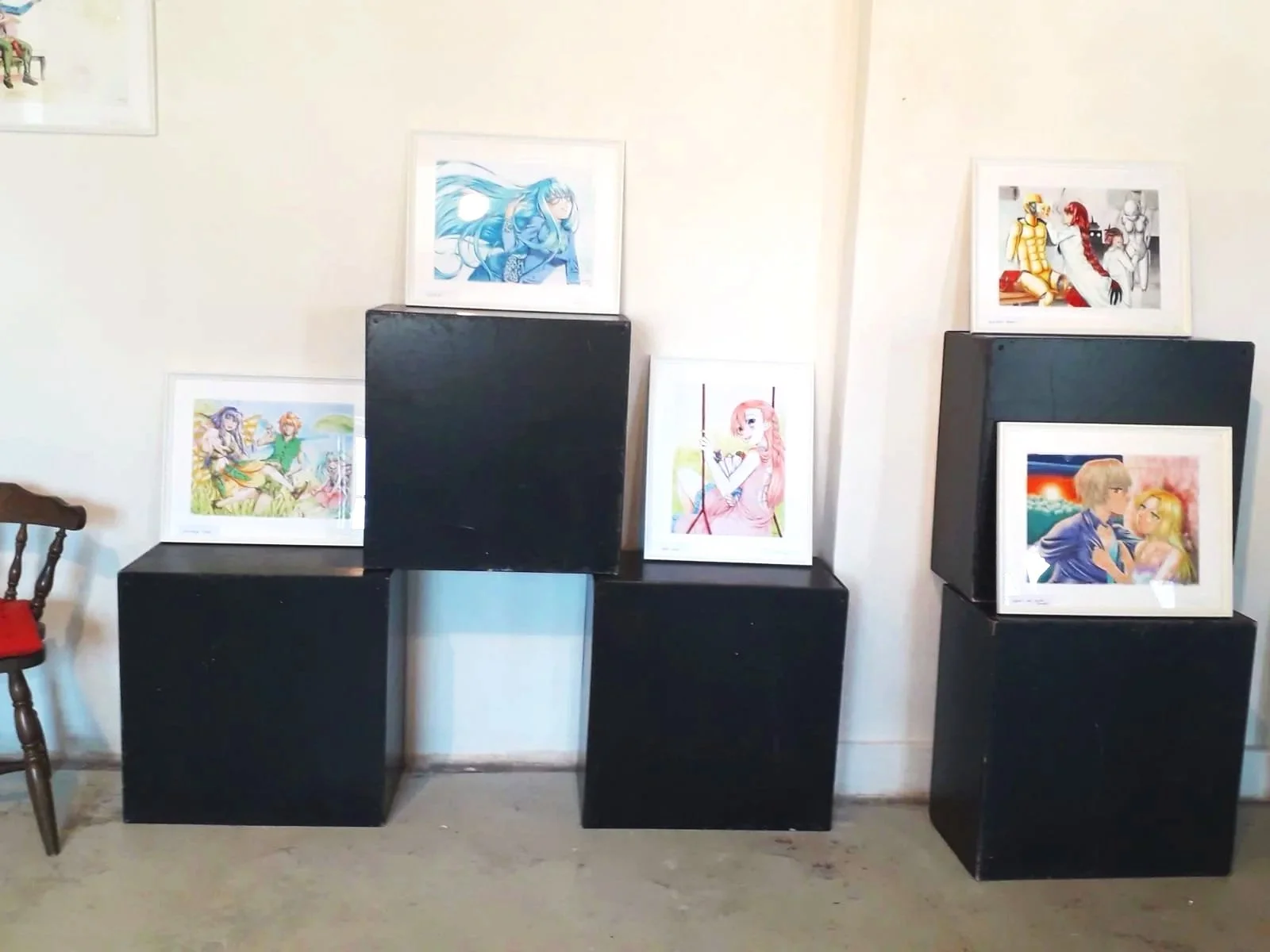
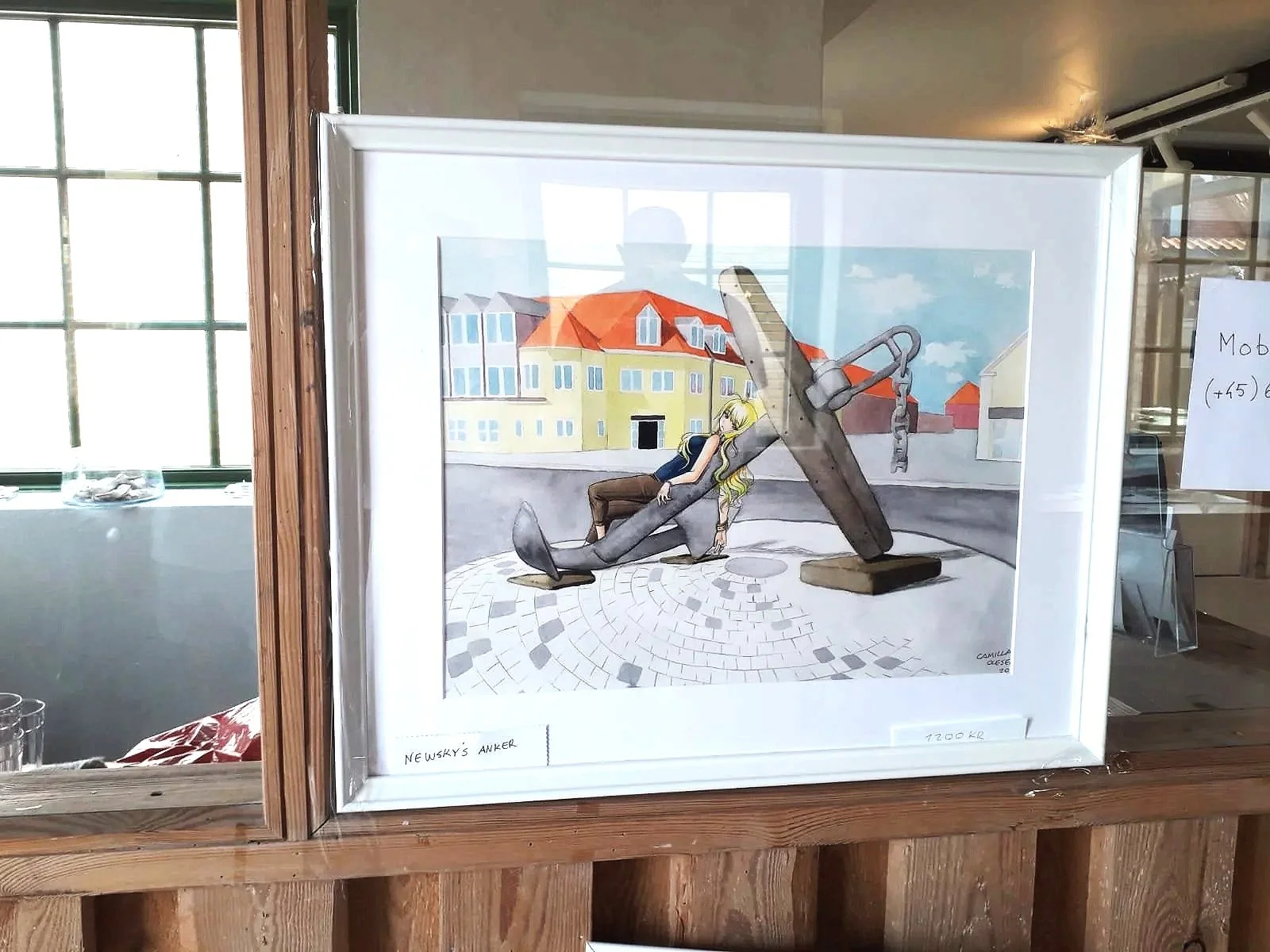
Meeting Visitors
One of my favourite parts of the exhibition was speaking with visitors.
On opening day, a group of older ladies arrived and immediately informed me that they had been among the people who came the day before because of the date confusion. Fortunately, they stayed to look around and ended up purchasing posters and postcards.
At the time, all sales were handled with cash. MobilePay was not nearly as common as it is today, and I did not have a card terminal, so I relied on a small cash box provided by the venue.
When there were no visitors, I often spent the quiet moments sketching in my notebook. Many people enjoyed watching an artist work in real time, and it often became a natural conversation starter.
An Unexpected Lesson
One question I heard repeatedly was:
"Do you have a website?"
At the time, I didn't.
Several visitors suggested that I create one, but I remember thinking:
"That sounds easy for you to say. I'm an artist, not a web developer!"
This was long before I discovered website builders such as Squarespace. Ironically, it would take me another six years before I finally launched my own website and online shop.
Looking back, those visitors were absolutely right.
What Actually Sold
The busiest period of the exhibition coincided with a local fair held annually in Thyborøn. The increased foot traffic brought many visitors through the door and resulted in strong sales of posters and postcards.
What surprised me, however, was that very few people were interested in purchasing the original framed artworks themselves.
My original illustrations were priced at around 1,200 DKK (€160 / $185), which I believed was quite reasonable. By the end of the exhibition, only a single original piece had sold—and it was purchased by an old friend of my father.
Meanwhile, posters and postcards sold consistently throughout the exhibition.
Although I had initially hoped to sell more original works, the smaller products ultimately generated most of the revenue and allowed me to cover my exhibition costs with a little extra left over.
What I Learned
Looking back, Manga at the Beach taught me several important lessons:
Affordable products often outsell original artwork.
Visitors love seeing an artist draw in person.
Promotion matters.
Small mistakes happen, and they are rarely the end of the world.
Having a website is more important than I realized.
Most importantly, I learned that people genuinely enjoyed my work. Hearing visitors share their thoughts, ask questions, and connect with my illustrations gave me confidence to continue pursuing art professionally.
Since then, I have gone on to exhibit my work again, including my exhibition Around Montescudaio in Italy in 2025, where I showcased digital artwork printed on foam canvas.
Every exhibition has taught me something new, and I hope sharing these experiences helps other artists who may be considering exhibiting their own work for the first time.
Thank you for reading, and if you would like to see some of the artwork from Manga at the Beach, feel free to browse my portfolio. Prints, posters, and selected exhibition pieces are also available through my shop.
I look forward to sharing more stories from my artistic journey in future posts.
